
If someone hears the word “safari” today, they almost certainly think of off-road vehicles, national parks, and cameras. Yet the original meaning of safari was quite different. Behind the word was not the world of photo tourism, but that of hunting expeditions—East African big game journeys where tracking, camp discipline, dangerous game, and long caravan life defined everyday reality.
The history of the safari is therefore much more than an exotic curiosity. It speaks simultaneously about the culture of hunting, the colonial era, social status, the emergence of conservation, and the ongoing debate about the place of trophy hunting in the modern world. The classic hunting safari is now partly history, partly myth, and partly a living legacy.
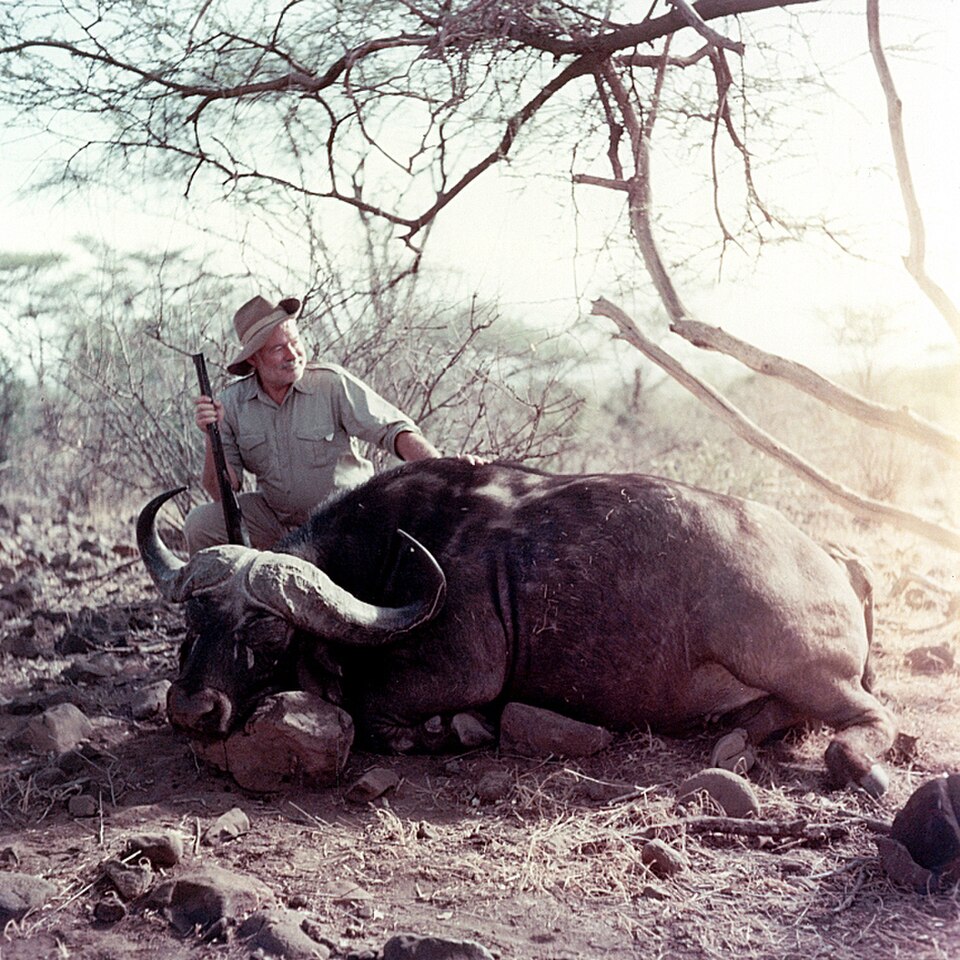
What did “safari” originally mean?
The word “safari” comes from Swahili and originally simply meant “journey.” In East Africa, it referred broadly to travel, movement, or a caravan expedition. European usage, however, gradually reshaped its meaning, and by the late 19th and early 20th centuries, safari came to refer primarily to a hunting expedition.
The classic African safari was not a one-day program. It was a moving camp: with porters, gun bearers, local guides, trackers, cooks, and skinners. The client hunter was only the most visible figure in this system. In reality, a safari was a complex logistical and field operation, where success depended on the knowledge and coordination of the entire team.
An African safari could last for months, even years. Camps sometimes consisted of hundreds of people, with local assistants carrying all equipment from one camp to the next. Such expeditions often provided stable livelihoods for multiple tribes.
The emergence of the hunting safari in Africa
Hunting existed in Africa long before the classic European safaris. For local communities, it was a source of livelihood, raw materials, and cultural practice. However, the hunting safari as an elite sport and organized big game expedition was fundamentally a product of the colonial era.
By the late 19th century, East Africa—especially present-day Kenya and Tanzania—had become a unique hunting destination for the Western world. There were several reasons: the region was rich in big game, the landscapes were vast and open, and it offered species that seemed exotic to Western eyes. Lion, elephant, leopard, Cape buffalo, and rhinoceros—these animals came to represent an entirely new and extraordinary world in the imagination of hunters.
It was here that Africa became seen as the ultimate proving ground for big game hunting. The safari thus became not only a form of hunting, but also a marker of social status and identity.
The classic safari became legendary precisely because it was not accessible to everyone. It required time, money, connections, and organization. Traveling to Africa for big game in the early 20th century was not merely a hunting trip—it meant entering one of the most exclusive and romanticized elite cultures of the time.
Taking big game, especially on foot, was considered a test of courage, composure, marksmanship, and self-control. The safari thus acquired symbolic meaning beyond adventure. It became a rite of masculinity, reinforced by contemporary literature, journalism, and social culture.
This is also where the concept of the “Big Five” originated. Today many know it as a tourism label, but originally it was strictly a hunting term, referring to the animals considered the most dangerous to hunt on foot.
The white hunter and the world of the classic safari
The history of the safari is unimaginable without the figure of the “white hunter.” Today the term carries historical and colonial connotations, but it once referred to a specific professional role. The white hunter was a professional guide who organized African big game hunts for paying clients.
He knew the terrain, the movements of game, the fundamentals of tracking, how to handle dangerous situations, and the entire logistics of a safari. Yet the true engine of any safari was always the full local staff. Without trackers, beaters, gun bearers, camp workers, and guides, none of the famous hunts would have been possible.
Nevertheless, books and films of the era primarily elevated the figure of the white hunter into legend. This is part of why the history of the safari is both reality and myth.
The golden age of the classic African safari falls roughly in the first half of the 20th century. During this time, big game hunting, colonial presence, and literary romanticism together shaped the image of the safari. Expeditions were long, difficult, and often dangerous, yet they held a powerful allure for the wealthiest and most prominent individuals of the era.
In this period, safari meant more than hunting. It meant travel, social experience, fieldcraft, and prestige. Stories around the campfire, tracking at dawn, following wounded game, and maintaining camp discipline were as much a part of the experience as the shot itself.
Theodore Roosevelt and the impact of major African expeditions
One of the most famous figures of the classic era was Theodore Roosevelt, whose post-1909 African journey became almost symbolic. His expedition was both a hunting enterprise and a scientific collecting mission—illustrating the complexity of the safari world.
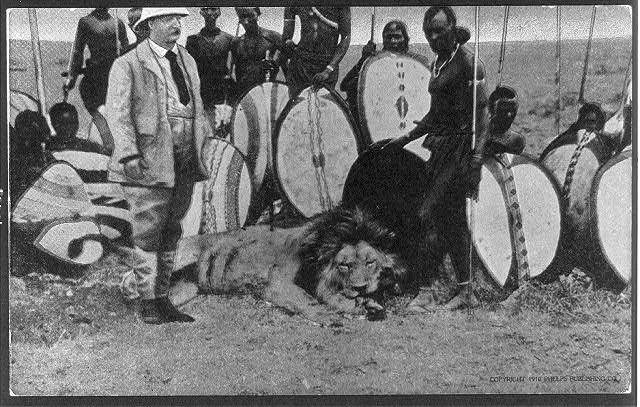
Source: Wikimedia
At the time, big game expeditions were not just about sport or recreation; they could also involve collection, representation, and scientific interest. From a modern perspective this may seem contradictory, but historically this duality is precisely what gave the safari its unique place: it was both adventure and institution.
The paradox of safari and conservation
One of the most interesting aspects of hunting safari history is that early African conservation partly emerged from within the hunting world itself. As pressure on big game populations increased, it became clear that some form of regulation was necessary.
However, this did not begin as conservation in the modern sense. Often, the goal was simply to ensure that huntable populations remained in the future. Protection initially arose from use, rather than from its rejection.
This duality remains relevant today. In the history of the safari, the hunter appears both as a user of wildlife and as someone who, in certain contexts, has an interest in regulated sustainability.
Hemingway, Ruark, and the romanticism of African hunting
Literature played a major role in shaping the legend of the safari. Ernest Hemingway, Robert Ruark, and others described African big game hunting in a way that elevated it beyond simple reporting. Safari became a literary symbol of character, masculinity, danger, and exotic freedom.
This romanticism remains strong today. For many, safari is not just a place, but a feeling: canvas clothing, double rifles, dusty dawn departures, and the silence of tracking. At the same time, it is important to remember that behind this atmosphere stood the full social system of the colonial era.
The old world could not remain unchanged. By the mid-20th century, it became increasingly clear that in many regions, big game hunting was placing excessive pressure on wildlife populations. Colonial systems collapsed, and newly independent African states began to reconsider the role of hunting.
A well-known turning point was Kenya, where hunting was banned in 1977. This was not only a legal change but also a symbolic boundary. The classic East African hunting safari effectively came to an end, while Kenya became one of the world’s most famous centers for photographic safaris.
The modern hunting safari
The safari did not disappear—it transformed. Today, hunting safaris continue primarily in countries such as Namibia, South Africa, Zimbabwe, Zambia, Mozambique, and Tanzania. These systems are typically governed by permits, quotas, concessions, and stricter international regulations.
Modern safaris differ from the old caravan expeditions, although certain elements remain. The focus today is more on legality, species-specific rules, trophy management, and conservation justification. The romance remains, but it is now framed by much stronger administrative and ethical structures.
The legacy of the safari: why it still matters
The history of the safari remains relevant because it extends beyond Africa. It condenses some of the most important questions of hunting: Where is the boundary between tradition and exploitation? When can use be considered sustainable? Can hunting be part of conservation? And how should we relate today to a legacy that is at once fascinating, professionally significant, and ethically contested?
The story of the safari should neither be oversimplified nor treated as a romantic postcard. It becomes far more interesting when viewed in its full complexity—as one of the most influential, contradictory, and instructive chapters in the culture of hunting.
The original world of the safari was not about cameras, but about rifles, tracking, big game tradition, and expedition discipline. The classic African safari was at once a status symbol, a demanding field enterprise, a colonial phenomenon, and a defining experience of modern hunting culture.
For this reason, the safari remains an important topic today. Not only because it is tied to the legend of Africa, but also because it helps us understand how the role of hunting has evolved. Ultimately, the history of the safari is not just about Africa—it is about how we think about hunting, our relationship with nature, and the responsibility of tradition.

I’m a passionate hunter and a fan of wild game cooking, sharing my experiences in the woods and my respect for nature through recipes and hunting stories. My goal is to inspire you to discover sustainable hunting and real, pure flavours.